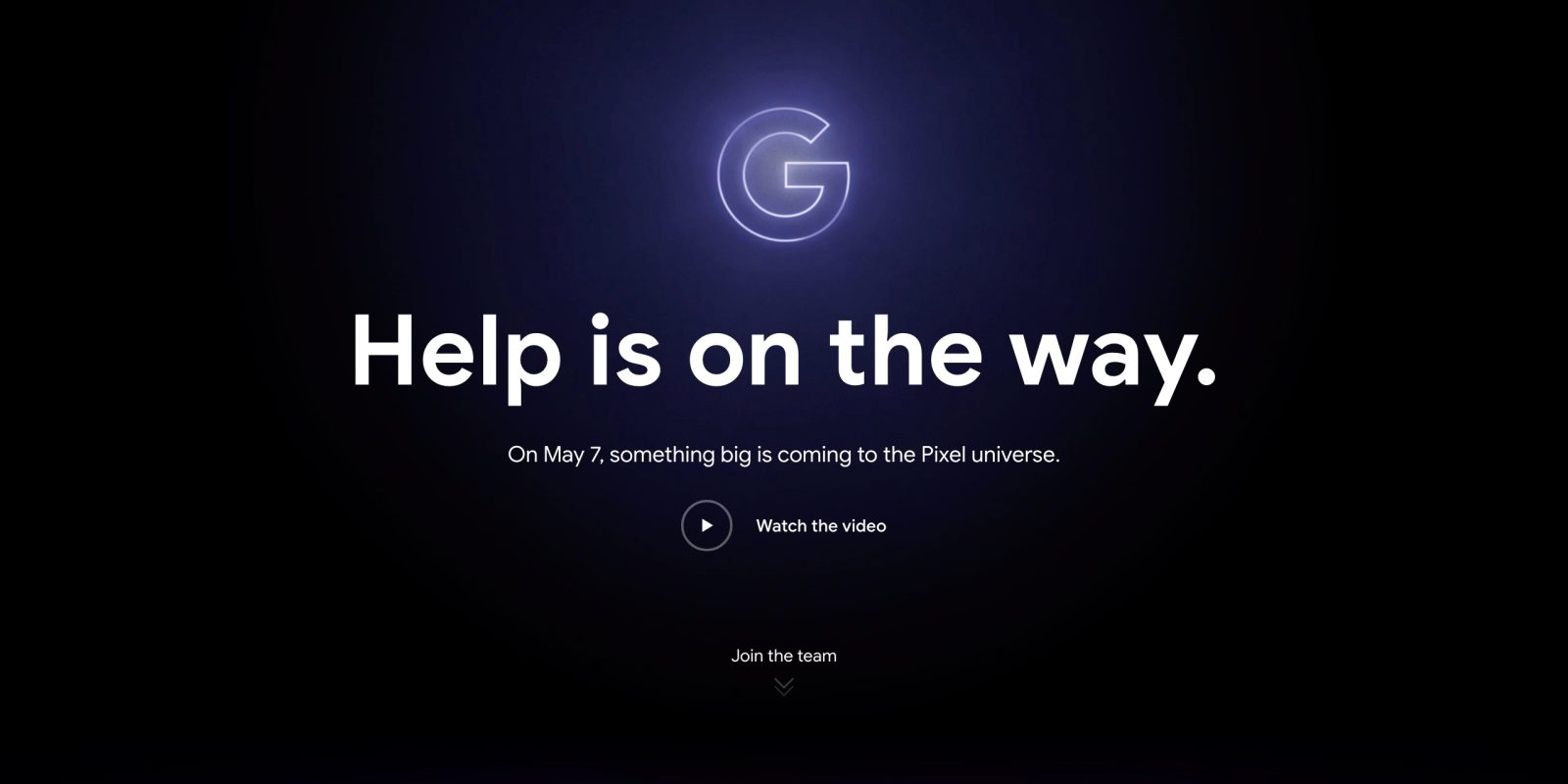
This new teaser page on the Google Store went live with an Avengers Endgame promotion for new Playmoji AR Stickers that were announced earlier this morning. Leveraging that superhero theme throughout, Google says “Help is on the way.” The “G” logo on this site is a Thanos shade of purple and very similarly styled to artwork for the upcoming movie in the Marvel franchise. The Google Store today allows users to sign-up for news, and recognizes if you’re already on the mailing list. Tuesday, May 7th happens to coincide with Day 1 of Google I/O 2019 in Mountain View. That opening keynote will likely be the best stage for announcements, with other possible introductions being a Google Home Hub rebrand to Google Nest Hub, and the increasingly leaked Nest Hub Max.
Android Q is the latest Android OS version by Google. With some advanced features and latest tech device compatibility. Google released the first beta version of the Android Q today. You can download and run Android Q on all Google Pixel devices, to get Android Q on your Google Pixel device, you need to be a part of the Google Android Beta program. How to Download Android Q: Once you are a part of Google's Beta program, you will receive the build over the air. Android Beta program users can enroll Google Pixel devices from the source link below. What's new in Android Q: Privacy: Google introduced new privacy and security policy with Android Q to enhance privacy for OS controls, file-based encryption, Google Play Protect, and more. With Android, Q Google has also provided options to control an apps' access to photos, videos or audio collections via new runtime permissions feature. Also, apps that access downloaded files on your device have to now go through the system file picker. Android Q has a unique real-time running feature which will prevent any background app from launching an activity unless it is essential, such as alarms or an incoming call.
Control over location: Android Q will give you more control over the location sharing. With Android Q, the user will have the option to provide app permission to use location all the time, only when the app is in use, or never. This is an extraordinary feature I found which will help your phone to save better and internet data. Device location access and foldable screen support : With new folding smartphones support one can let two apps work simultaneously, and to notify the app when it has focus. Apart from that, Google will also give you to decide how your app is shown on foldable screens. We should hear more on that in the upcoming betas. Sharing shortcuts: Android Q with a new shortcut feature in Android Q user can jump directly into another app for sharing content using a feature called Sharing Shortcuts. Also, the next Android version will include a new settings panel which will let you see key system settings such as Wi-Fi connection, network, and aeroplane mode on third party apps via a floating window. Dynamic Depth Image: With new Android Q image feature, apps can request a 'dynamic Depth Image' which allows you to use specialized blurs and bokeh options as well as enjoy 3D images and support for AR photography. Source: Android Beta program
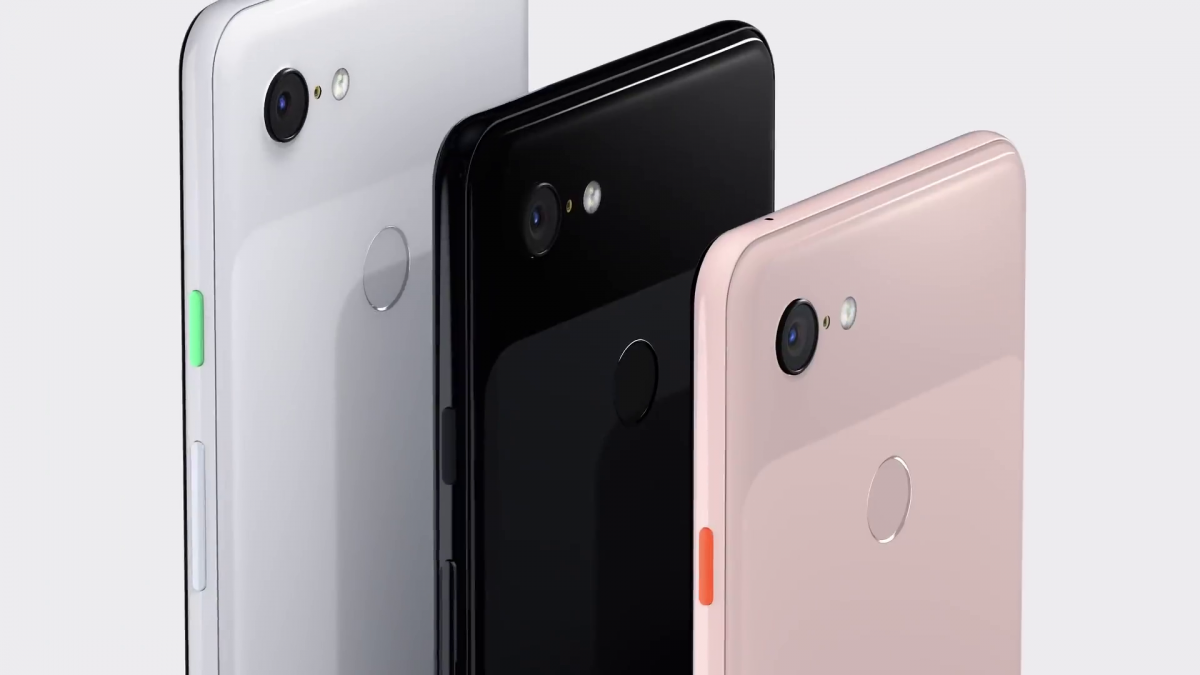
When Google announced the Google Pixel 3 and Google Pixel 3 XL we learned all of the carrier bands they would support. Nowhere in the launch documents of FCC specs did it mention support for LTE Band 48, an FCC addendum made public today shows that the Google Pixel 3 and Google Pixel 3 XL will support LTE Band 48 via a software update. The model listed in the FCC addendum specifically stated this update will be pushed to the G013A variant, which is the international version of the Google Pixel 3. This is the version that is sold everywhere outside of Japan, so this includes the majority of the devices sold around the world. LTE Band 48 isn’t well known but it was also known as the CBRS Band. Current Pixel 3 bands: FDD-LTE: Bands⁷ 1*/2*/3*/4*/5/7*/8/12/13/17/18/19/20/25*/26/28/29/32/66*/71 TD-LTE: Bands 38*/39/40/41*/42/46 Overall support of up to CAT 16 (1Gbps DL / 75Mbps UL), 5x DL CA, 4×4 MIMO, LAA, 256-QAM DL, and 64-QAM UL LTE Band 48 is 150 MHz of 3.5 GHz shared spectrum which has historically been used by the U.S. government for radar systems. Their announcement back in 2017 was big news as it was the first use of CBRS band 48 spectrum in an LTE Advanced carrier aggregation demonstration. Federated Wireless has said they are providing its Spectrum Access System “to dynamically prioritize traffic” within the FCC’s spectrum sharing framework. Carriers in the United States have gone on record saying they consider the 3.5 GHz spectrum as a core band for 5G deployment around the world. It’s unclear when this software update will be pushed to the Google Pixel 3 and Google Pixel 3 XL, we will update you once additional information has been made available. Source: FCC
Google has sent out invitations for its next hardware event, which will take place in New York on October 9 at 11:00 a.m. ET/10 a.m. CT/8 a.m. PT. If you’ve been following the headlines rumors state we could see a refreshed Google Pixelbook, new Pixel Buds, and possibly even Google’s own Smart Display.