Alcatel Onetouch has released Android devices like the Fierce 2 and Evolve 2 in the U.S. for quite some time now. Nothing major has come from the company for a while, but that could change soon.
It was recently discovered that a company by the name of “Wide Progress Global Limited” acquired the Palm brand and trademarks from HP and its legal counsel, Rishi Varma. The person that represented Wide Progress Global Limited in the deal goes by the name Nicholas Zibell, who also happens to be President for the Americas and Pacific divisions of Alcatel Onetouch.
The company “Wide Progress Global Limited” also appears as the registrant to mynewpalm.com, which you’ll be directed to if you navigate to palm.com. On the mynewpalm.com site is the old Palm logo along with the words “Coming Soon” and “Smart Move.”Keep in mind “Smart Move” happens to be the brand of, you guessed it, Alcatel Onetouch. The brand was announcedat IFA in 2013.
HP recently indicated that it will cease all backend support for WebOS devices on January 15. After that time, WebOS device owners will no longer be able to download or update apps, reset or restore their devices, setup new devices, or retrieve lost passwords.
According to HP, the web services shut down will not disable existing hardware. HP recommends that WebOS device owners download any apps they may want to keep prior to November 1, 2014. "Shutting down webOS cloud services is part of an orderly end of life program," explained HP. "HP announced the end of WebOS devices over 3 years ago, but the services were kept running to allow customers to continue to have a richer user experience. The user count has dwindled to the point where it is no longer viable to keep the services running."
HP acquired WebOS when it bought Palm in 2010. HP killed its Palm hardware business in 2011 and has since open-sourced WebOS. LG eventually purchased WebOS from HP, for use in select consumer electronic devices.
HP unveil today in Smoke Silver, Ocean Turquoise, Snow White and Twinkle Black, the HP Chromebox is powered by a Haswell processor. The HP Chromebox has HDMI, DisplayPort, Bluetooth and 4 USB 3.0 ports.
The HP Chromebox will be priced at $179. HP says that it will be offering an Intel Core i7 model and it will presumably be offered in a Chromebox for Meetings package in the near future. Expect this Chromebox to arrive in the United States this spring.
HP has announced the quad-core Slate 6 and Slate 7 VoiceTab, with a 720P displayed in tow. The initial launch country will be India but more are on the way. While no price was given, we’d imagine that since the other details were true, the $200 price point for the Slate 6 VoiceTab and $250 for the 7-inch seem like a pretty good starting point.
The phones will come with 16GB of on board storage and have a Micro-SD card for 32GB more storage. As you can see in the image above, they both have stereo speakers (no word yet on Beats audio).
It appears that HP has really done its homework here and has identified a market where it can make things happen. HP obviously has a huge brand and PC presence in India and at the same time, the market is easy to enter because the carriers aren’t gatekeepers like they are in the US.
Also ringing an alarm bell is the Android 4.2 launch OS. Combined with that pretty heavy looking skin/overlay, Indian consumers are already starting 2 OSes back…and counting.
In all, though Google has to be pretty satisfied with the launch. HP is traditionally a Windows shop but since Meg Whitman’s return has gone ChomeOS and Android first with the Slate line of tablets and now their Smartphones.
Report's form 9to5Google claims that HP is prepping a new low cost Android smartphone that could be introduced as soon as next week.
This handset is described as being similar to Samsung’s Galaxy Note 3 and is expected to target prepaid and emerging markets with a $200 price point.
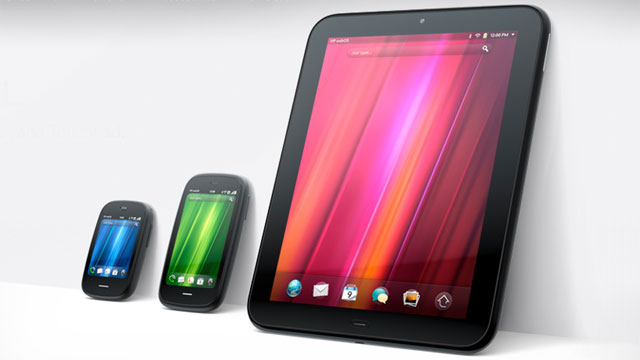
HP hasn't released a new smartphone since the company purchased Palm and its webOS mobile operating system in 2010 and subsequently released a few devices that ran the software, including the HP Veer and HP TouchPad. It discontinued operations on webOS hardware in late 2011, and recently sold webOS to LG.
A claimed render of HP’s promised smartphone sent anonymously to phoneArena apparently shows it running stock Android. The render is pretty nice, and the hardware appears rather generic, so there’s no guarantee it’s genuine but the company did opt for near-stock Android for its Slate tablet. If the leak is real, we’d applaud a decision to go with a pure Android experience but add that HP will need to pull something out of the hat with either specs or apps to meet its promise of “a differentiated experience.” We suggested earlier that HP’s credentials as the world’s largest PC manufacturer might make a business-orientated phone a smart move now that the market share of the former business smartphone leader, Blackberry, has fallen to less than 5 percent. Something special in the hardware perhaps a fingerprint sensor for security would one possibility. Enterprise-orientated apps would perhaps be a more likely one, especially given the company’s partnership with Google to offer Google Apps to small businesses. A similar approach with a smartphone might enable the company to meet that new-and-different promise despite a rather ordinary-looking box running stock Android. Source: phoneArena
If given the chance to do things over again, former Palm CEO Jon Rubinstein would not have sold the company to HP. When asked by FierceWireless about whether he would have done anything differently, Rubinstein said that he wouldn't "have sold the company to HP. That's for sure. Talk about a waste."
We're still rather bitter about the abrupt cancellation of webOS, so it's no surprise that the man who dedicated years of his career and his reputation to webOS would also be unhappy with how things turned out. But as we've seen time and time again, Palm was often a victim of circumstance and political carrier games.
The first step down the road to perdition for Palm was their launch partner: third place US carrier Sprint. Said Rubinstein: "We almost had deals with Verizon and with Vodafone, and in the last minute both of those guys decided not to go through with the deal, so we had a deal with Sprint," saying that it was "the best deal we could get at the time."
But all of that is in the past. What's Rubinstein up to these days? As we've previously reported, he's joined the boards of both Amazon and Qualcomm, which Rubinstein says are "uniquely positioned for the future of where things are going." He also spends some of his time helping out some 'small companies'. And, of course, taking time off and relaxing at his Mexican villa from where Ed Colligan lured him away years ago.
And as we've all noticed, a lot of what we love about and was pioneered by webOS has found its way into its former competitors, including yesterday's reveal of iOS 7. Rubinstein listed a number of features, including notifications on Mac OS X, multitasking cards (on, well… everything), Synergy contacts and messaging melding, over-the-air updates, and so much more.
This certificate is responsible for ensuring secure access to HP's webOS cloud services, including backup and the App Catalog, and once it expires, there's no accessing those services.
We've been wondering if or when HP was going to fix the issue, and indeed had heard rumblings that a fix was in the works and due wait for it in the coming weeks. Today we got word from HP that the fix is indeed coming. In fact, it's due today, and it's coming in the form of an update to the the webOS App Catalog.
Updating one app to update a part of webOS isn't something new to HP. Back in 2011 they issued an update to the Maps app on webOS smartphones, that in addition to switching the mapping service from Google Maps to Bing Maps also installed Enyo framework support on the device. Granted, this isn't as much of a stealth update - the sole purpose of this update to the App Catalog is to install a new, later expiring root certificate.
The App Catalog update is for webOS 2.1 and higher devices only. For those running older versions of webOS, you'll have to go into the App Catalog and manually download the HP App Catalog Update app.
Seeing as the update is to replace the certificate that expires on July 23, you'll need to do this before July 23. If you don't, it's still possible, but you're going to have to trick the system by setting your device clock back to before July 23, 2013 and then downloading the update.
Once you've updated with the new certificate things should continue to work for quite some time. In fact, we'd expect a shutdown from HP's webOS servers before the new certificates expire.
HP is announcing SlateBook x2 today. We're basically looking at a standard 10-inch Android tablet, but in the configuration of what HP is calling a "two-in-one device" that has a keyboard dock. As is usually the case, the tablet is completely contained as a stand-alone device, with a 1920x1200 IPS display, Tegra 4 processor and 64GB of storage. The SlateBook x2 is also shipping with Android 4.2.2, and what looks like very limited customizations from HP -- it even goes so far as to say this is "HP’s push to offer access to the Google experience". The docking station has a full keyboard and trackpad, along with a USB port, SDcard slot and an additional battery to charge the tablet.
Based on the information given to us right now the HP SlateBook x2 is expected to ship in August in both grey and white lid colors, and the pricing seems quite nice at $479.99. However this is a "starting price", and it isn't clear whether or not that includes the keyboard dock. The tablet market may be a bit different by the time this device hits store shelves, but it certainly seems like it will have a better shot at grabbing sales than the Slate 7 does.
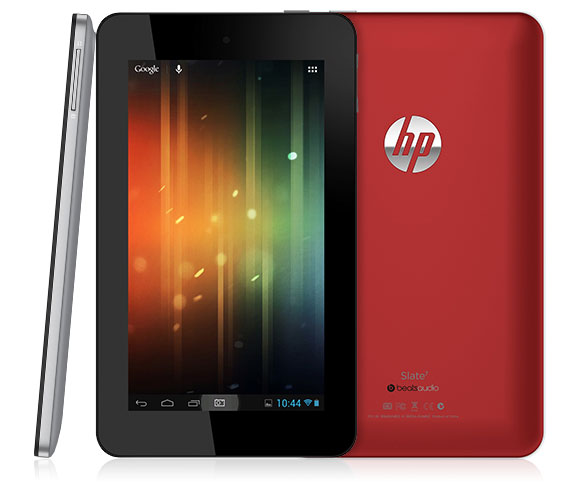
HP has entered back in to the Android tablet game, after a little over 4 year's working on WebOS. Their first effort, the HP Slate 7 goes on sale today for a very reasonable $169.
On the plus side, HP offers SD Card expansion, built-in printing, and Beats Audio to the package when compared to the $199 Nexus 7.
Like the Nexus 7, the Slate is almost entirely Stock Android. Unlike the Nexus 7, however, the screen is the same 1024×600 resolution as the two year old base model Kindle which currently sells for $159.
Almost two years after the HP TouchPad tablet was released, the aging 9.7 inch tablet continues to learn new tricks. The latest? You can now run Android 4.2 Jelly Bean on HP’s discontinued tablet. Developer SGA has started releasing test builds of CyanogenMod 10.1 for the HP TouchPad.
SGA also offers builds of CM10 based on Android 4.1.2, but it’s the new CyanogenMod 10.1 builds that offer Android 4.2 Jelly Bean.
That means you get support for lock screen widgets, Google’s new notification system, and other improvements.
As of April 5th, there are still a few bugs to deal with. Bluetooth doesn’t work. The front-facing camera doesn’t work, and hardware-accelerated video decoding doesn’t work out of the box.
But it’s actually not that tough to enable support for accelerated video playback yourself. It’ll probably be available in future builds, but you can find instructions for enabling it below. This’ll let you stream video from Netflix, watch HD video from YouTube, and use hardware decoding in video players such as MX Player or Dice Player.
I’d still only recommend installing SGA’s builds if you’re willing to risk breaking your tablet. Users have reported that the battery can run down while the tablet is sleeping… and if reaches zero you may have trouble getting the TouchPad to turn back on again, even after you plug it in.
So proceed with caution… and with a charging cable handy. You can also just completely power down your tablet when you’re not using it instead of letting it sleep.
RootzWiki forum member RolandDeschain79 has put together a good guide of what’s working, what’s not working, and steps you might want to take to improve the experience of running SGA’s test builds on your tablet.
Installing CyanogenMod 10.1
If you’ve already installed Android on your HP TouchPad you should already have ClockworkMod or TWRP recovery on your device.
You can then reboot into recovery and install the updates. You don’t have to perform a factory reset first, but it probably wouldn’t hurt. It’s also a very good idea to perform a complete backup in recovery in case anything goes wrong and you want to restore from your backup.
If this is your first time installing Android on an HP TouchPad that’s only been running webOS up until now, follow our guide for installing Android on the TouchPad. Just use the new builds of CyanogenMod and gApps instead of any older versions.
Enabling hardware-accelerated video
Theoretically all you need to do to get Netflix and YouTube HD videos to play is swap out a single file on your tablet. But the process for doing that is actually a little tricky.
As xda-developers forum member webdroidmt discovered, what you want to do is replace the vidc_1080p.fw file in the /etc/firmware directory on the HP TouchPad with one from an Android 4.1 ROM where hardware-accelerated video works.
2. Open the .zip file on my PC and navigate to the \system\etc\firmware directory.
3. Extract the file called vidc_1080p.fw to my desktop.
4. On the HP TouchPad I installed Root Explorer from the Play Store (other file browsers with root access may work, but Root Explorer is easy to work with when changing file permissions).
5. Navigate to the /system/etc/firmware directory on the TouchPad using Root Explorer.
6. Tap the button at the top of the screen that says “Mount R/W” to allow read/write access to the directory.
7. Move the vidc_1080p.fw file from this directory to another directory. (You could delete it, keep a copy in case anything went wrong. So I copied it to the root directory of my SD card. I also renamed it so I wouldn’t confuse it with the new file).
7a. You may be tempted to just rename the file. Don’t do that. You have to move it out of this directory in order to make room for the new file you’re about to move in.
8. Copy the vidc_1080p.fw file from step 3 to the /system/etc/firmware directory on the HP TouchPad (you can do this by connecting your tablet to your PC with a USB cable, emailing yourself the file, or whatever your preferred method for transferring files to your tablet is).
9. Long-press on the vidc_1080p.fw file and change the permissions so that they match the image below. When you’re done, Root Explorer should show the permissions as rw-r-r–.
10. Reboot your tablet.
Once the TouchPad finishes rebooting, you should have support for hardware-accelerated video playback.
This morning it was revealed that HP is selling its webOS assets to LG - including the source code, personnel, and patents - and that LG intends to utilize those assets to deliver a webOS-powered smart TV in early 2014. LG has no ambitions or intentions to bring webOS to their mobile space as they're perfectly happy with all of the work they've put into Android over the past few years. To be frank, we would have been more than pleasantly surprised to see anybody take up the mantle of mobile webOS development.
And so, the final chapter of mobile webOS began to draw to a close. There's always the work that the fine folks at WebOS Ports are doing bringing Open webOS to devices like the Samsung Galaxy Nexus and Asus Nexus 7, but as we've been saying since the full release of Open webOS 1.0 back in September, the open source release is missing a lot in the way of deep features. While Open webOS Professional Edition was supposed to fix that, at this point the only point we can expect to see Professional Edition is in January 2014 when it's running in some form on an LG television at CES.
The team at Palm and HP needed hundreds more working to bring webOS up-to-snuff feature-for-feature with the competition. It's simply wishful thinking to expect that WebOS Ports of any other webOS homebrew project will be able to produce a fully workable port of Open webOS that any sane person would be willing to use as their primary smartphone or tablet.
Moreso than HP abandoning webOS for Android, this purchase of all webOS assets by LG represents a significant turning point for this webOS community. Palm and webOS have changed hands so many times it's boggling to think about - in just the past four years, Palm saw a major cash infusion from Elevation Partners, launched a new mobile platform, got bought by HP,launched their first tablet, saw that tablet get brutally canceled, was split in two,shopped around, open sourced, and now sold to Korean electronics giant LG.
With LG offering no relief to those craving new webOS hardware, it's time to consider more seriously that this may very well be the end for webOS as we know it. There's no guarantee that webOS on LG TVs will have multitasking cards or rich notifications or universal search or Synergy data unification or any of the much-lauded features that made webOS the operating system that we can't help but adore. We've been suckers for webOS for over four years now, and that's not about to change. No matter what happens in the coming years, webOS will always occupy a significant portion of our gadget nostalgia.
HP just unveiled their first ever Android tablet, the Slate 7. The device carries a 7″ display, has access to Google Play and the rest of Google’s suite of apps, weighs 13 ounces, utilizes Beats Audio, is powered by a 1.6GHz dual-core processor, 3MP rear camera, VGA front camera, runs Android 4.1, and drops in at a ridiculously low price of $169.
While tinkering around to the web today, we came across a new CM 9 nightly dated 2/17 for the aging HP Touchpad. We have found the changelog to state the only changes are FM radio support. Be sure to update us as to the changes you have found in this new CM9 nightly build. Hit the source link below to download it. Source: Tablet Support Forum
Hewlett-Packard will
now reportedly look towards Androidto
power its next-generation of mobile devices. Sources speaking
to ReadWriteclaim
that the company is planning to release a high-end tablet that will
be equipped with NVIDIA’s
new Tegra 4 processorand
powered by Google’s mobile operating system. It was also reported that HP
may launch an Android-powered smartphone,
however earlier comments from CEO Meg Whitman indicated that a
new handset won’t be released in 2013.
The news of HP’smigration
to Android comes shortly after the company launched
a new computer based on Google’s Chrome OS.
HP’s high-end Android tablet will reportedly be announced soon.
When HP announced that webOS would become an open-source platform, the company stated that it would be an "active participant and investor in the project," and it looks to be keeping its word. The Powerbase has found more than 50 job postings at HP looking for developers in Sunnyvale, California and Shanghai to work on webOS and Enyo, the operating system's HTML5-based application framework. The positions range from internships to both senior designers and engineers.
With Open webOS finally reaching version 1.0 and even making an appearance on a Samsung Galaxy Nexus development of the operating system seems to be moving in the right direction. It's important to note, however, that many members of the original Enyo team left earlier this year to work for Google, so the company may just be looking to fill the gaps that resulted from the departure. At this point, the future is still unclear for webOS, but it's obvious that HP hasn't given up on the operating system despite its history of uncertainties.
Personally I'd like to see Jason Robitaille @Jaycanuck apply and be accepted. I have followed this guy since I first fell in love with webOS in 2009. This guy is one of the most amazing Homebrew developers I have ever followed.
WebOS seems to be a mobile operating system on life support, it’s no surprise there is still some interest. It is a very good operating system, and had Palm and HP not dropped the ball on the Pre series and the TouchPad respectively it could have seriously challenged the market as a premier operating system.
Despite all that, developers are still making it accessible through Open WebOS, a development effort that will keep the operating system ticking on modern devices. The only problem with WebOS in general is still its lack of developer support, and with a very limited userbase to target that problem won’t be eradicated anytime soon.
A new device is being supported as the ASUS Transformer Prime has gotten its very own port of Open WebOS. As exciting a development as it is we have to let that excitement die down for just a bit.
The port is not yet ready for consumption by the general public, and to avoid being blamed for WW3 Steven Troughton, the main developer responsible for the port, will not release it at this time. It’s coming, though, and you should do yourself a favor by following this Twitter account for news on its arrival.
In addition to today's release of the core apps and LunaSysMgr for Open webOS, we got some news that's both surprising and heartbreaking: Open webOS will not support existing webOS devices. According to today's blog post on the Open webOS Project Blog, the development team is "aiming for support on future hardware platforms where SoC's [system-on-chips] support Linux 3.3+ lernel and where open source replacements for proprietary components are integrated. Existing devices cannot be support because of those many proprietary components, including graphics, networking and lack of drivers for a modern kernel".
Feel like you just got punched in the gut? Yeah, us to. Despite being a modification and enhancement of the existing webOS, Open webOS will not be able to support any existing webOS devices, including the most-recently-released TouchPad and Pre3. Reasoning? Their processors don't support the Linux Standard Kernel nor are there complete open source replacements for hardware component drivers. If you were hoping to run Open webOS on your TouchPad, you're going to have to rely on the community to get it done, not HP.
We're not at all thrilled with this decision. HP already has access to the proprietary drivers for the TouchPad, Pre3, and a whole slew of webOS devices and could put together a release of Open webOS for those devices. But yet again, HP's made the decision to neglect off a small but loyal customer base in favor of pursuing bigger dreams. We understand that the resources available to the Open webOS team are limited - certainly much more limited than they were eighteen months ago when HP decided not to bother finishing a webOS 2.0 update for older Pre and Pixi devices and buried it under the news of the TouchPad, Veer, and Pre3 announcements - but this pattern of dumping on those who have stuck with the platform isn't the makings for continuing loyalty. People love webOS, but they can only put up with being slighted for so long.
As pointed out in the blog post, there is at least the webOS Community Edition release for us to tinker with for existing devices (i.e. the TouchPad), which included the older version of the LunaSysMgr as released in webOS 3.0.5. Today's announcement crystallizes the Community Edition's reason for existence: it was a pre-appeasment meant to be there, ready for this news, so HP can say, "But we already gave you that! Isn't that enough?"
There are two things to keep in mind moving forward. One: there's a large and growing number of Android devices out there that offer support for the Linux Standard Kernel 3.3, and given the number of devices supported by the open source CyanogenMod Android project there are plenty of drivers available for those components. Two: The webOS homebrew community cannot and will not be held back. They've already started working on the webOS Community Edition release of LunaSysMgr to see how well they can get it to work on the Pre3, and it'll only be a matter of time before they figure out how to get the goodness of Open webOS to work on our current webOS devices.
* Images and video link Removed Per Request of Transparent House *
As webOS Nation has discovered, the design firm Transparent House posted a brief clip of a device described as "WindsorNot" some eight months ago, which is very clearly a touchscreen only webOS smartphone. As the site notes, that appears to be the very same device that had previously turned up in leaked photos under the codename "Stingray," and it estimates that the phone has the same 3.6-inch screen as the Pre 3. Details are scarce beyond that, but you can get a good look at what might have been in the video after the break not to mention yet another look at the unreleased TouchPad Go (a.k.a. Opal) on Transparent House's Vimeo page linked below.
Be sure to leave a comment, let us know what you think.
As promised back in March, HP today released to open source some large chunks of webOS 3.0.5 as the new "Community Edition". The Community Edition of webOS is meant for, well, the homebrew community and will enable homebrew developers even deeper (and more legal) access to the webOS source code to make alterations and improvements.
As a sign of how serious HP is about the community aspect of the webOS Community Edition, they actually worked hand-in-hand with the WebOS Internals homebrew group to make this happen. WebOS Internals has put together a team named WebOS Ports dedicated to working with the Community Edition, led by Tom King - though you might know him from his work as ka6sox.
So just what can we expect out of the Community Edition? HP's code releases come from webOS 3.0.5 and as such are geared towards the TouchPad. Among the things the WebOS Ports team (and anybody else, it is open source after all) will be able to tinker with are notifications, the app launcher (hello custom pages), Just Type, and even card view among other things.
We're excited about the potential for the webOS Community Edition. There's a lot of low-hanging fruit in webOS could be fixed, updated, or added thanks to the newly open-sourced code and the WebOS Ports team. Yeah, we're psyched. Just imagine... a TouchPad with a zoomed-out card view, or Just Type with multi-choice actions, or built-in Twitter and Facebook sharing across all apps, or... the possibilities may not be endless, but they are many.
It's worth noting that the webOS Community Edition release and Open webOS are two separate projects. Open webOS is going for the 1.0 version and is an active and ongoing project for HP, while the Community Edition is more of a code dump for the benefit of the community.

 Alcatel Onetouch has released Android devices like the Fierce 2 and Evolve 2 in the U.S. for quite some time now. Nothing major has come from the company for a while, but that could change soon.
 Keep in mind “Smart Move” happens to be the brand of, you guessed it, Alcatel Onetouch. The brand was announced at IFA in 2013.