Showing posts with label webOS. Show all posts

Sunday, January 4, 2015

Palm Could Soon Make A Return, Courtesy Of Alcatel Onetouch

Alcatel Onetouch has released Android devices like the Fierce 2 and Evolve 2 in the U.S. for quite some time now. Nothing major has come from the company for a while, but that could change soon.

It was recently discovered that a company by the name of “Wide Progress Global Limited” acquired the Palm brand and trademarks from HP and its legal counsel, Rishi Varma. The person that represented Wide Progress Global Limited in the deal goes by the name Nicholas Zibell, who also happens to be President for the Americas and Pacific divisions of Alcatel Onetouch.

The company “Wide Progress Global Limited” also appears as the registrant to mynewpalm.com, which you’ll be directed to if you navigate to palm.com. On the mynewpalm.com site is the old Palm logo along with the words “Coming Soon” and “Smart Move.”palmsmartmoveaamKeep in mind “Smart Move” happens to be the brand of, you guessed it, Alcatel Onetouch. The brand was announced at IFA in 2013.
Source: Palm

Saturday, October 18, 2014

HP To Shut Down WebOS Support January 15


HP recently indicated that it will cease all backend support for WebOS devices on January 15. After that time, WebOS device owners will no longer be able to download or update apps, reset or restore their devices, setup new devices, or retrieve lost passwords. 

According to HP, the web services shut down will not disable existing hardware. HP recommends that WebOS device owners download any apps they may want to keep prior to November 1, 2014. "Shutting down webOS cloud services is part of an orderly end of life program," explained HP. "HP announced the end of WebOS devices over 3 years ago, but the services were kept running to allow customers to continue to have a richer user experience. The user count has dwindled to the point where it is no longer viable to keep the services running." 

HP acquired WebOS when it bought Palm in 2010. HP killed its Palm hardware business in 2011 and has since open-sourced WebOS. LG eventually purchased WebOS from HP, for use in select consumer electronic devices.


Saturday, January 11, 2014

HP Rumored To Be Prepping Affordable Android Phone

Report's form 9to5Google claims that HP is prepping a new low cost Android smartphone that could be introduced as soon as next week.

This handset is described as being similar to Samsung’s Galaxy Note 3 and is expected to target prepaid and emerging markets with a $200 price point.

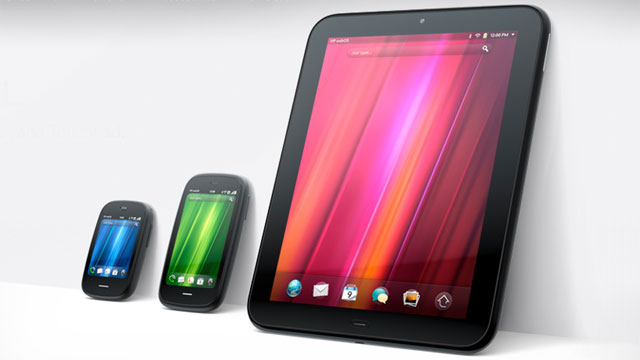
HP hasn't released a new smartphone since the company purchased Palm and its webOS mobile operating system in 2010 and subsequently released a few devices that ran the software, including the HP Veer and HP TouchPad. It discontinued operations on webOS hardware in late 2011, and recently sold webOS to LG.


Source: 9to5Google

Friday, June 14, 2013

Jon Rubinstein, Palm Sale To HP Was A Waste

If given the chance to do things over again, former Palm CEO Jon Rubinstein would not have sold the company to HP. When asked by FierceWireless about whether he would have done anything differently, Rubinstein said that he wouldn't "have sold the company to HP. That's for sure. Talk about a waste."
We're still rather bitter about the abrupt cancellation of webOS, so it's no surprise that the man who dedicated years of his career and his reputation to webOS would also be unhappy with how things turned out. But as we've seen time and time again, Palm was often a victim of circumstance and political carrier games.
The first step down the road to perdition for Palm was their launch partner: third place US carrier Sprint. Said Rubinstein: "We almost had deals with Verizon and with Vodafone, and in the last minute both of those guys decided not to go through with the deal, so we had a deal with Sprint," saying that it was "the best deal we could get at the time."
But all of that is in the past. What's Rubinstein up to these days? As we've previously reported, he's joined the boards of both Amazon and Qualcomm, which Rubinstein says are "uniquely positioned for the future of where things are going." He also spends some of his time helping out some 'small companies'. And, of course, taking time off and relaxing at his Mexican villa from where Ed Colligan lured him away years ago.
And as we've all noticed, a lot of what we love about and was pioneered by webOS has found its way into its former competitors, including yesterday's reveal of iOS 7. Rubinstein listed a number of features, including notifications on Mac OS X, multitasking cards (on, well… everything), Synergy contacts and messaging melding, over-the-air updates, and so much more.

Thursday, June 6, 2013

HP To Issue Root Certificate Fix, Ensure Cloud Services Access To webOS

This certificate is responsible for ensuring secure access to HP's webOS cloud services, including backup and the App Catalog, and once it expires, there's no accessing those services.
We've been wondering if or when HP was going to fix the issue, and indeed had heard rumblings that a fix was in the works and due wait for it in the coming weeks. Today we got word from HP that the fix is indeed coming. In fact, it's due today, and it's coming in the form of an update to the the webOS App Catalog.
Updating one app to update a part of webOS isn't something new to HP. Back in 2011 they issued an update to the Maps app on webOS smartphones, that in addition to switching the mapping service from Google Maps to Bing Maps also installed Enyo framework support on the device. Granted, this isn't as much of a stealth update - the sole purpose of this update to the App Catalog is to install a new, later expiring root certificate.
The App Catalog update is for webOS 2.1 and higher devices only. For those running older versions of webOS, you'll have to go into the App Catalog and manually download the HP App Catalog Update app.
Seeing as the update is to replace the certificate that expires on July 23, you'll need to do this before July 23. If you don't, it's still possible, but you're going to have to trick the system by setting your device clock back to before July 23, 2013 and then downloading the update.
Once you've updated with the new certificate things should continue to work for quite some time. In fact, we'd expect a shutdown from HP's webOS servers before the new certificates expire.

Tuesday, April 2, 2013

Best Buy Offering Verizon Palm Pre 2 For 44.99


If you're looking to cut costs on your cell phone contract and maybe upgrade from a beaten old Pre or Pre Plus, you might want to turn some attention to Best Buy and Verizon, as they have a Verizon Palm Pre 2 available contract-free for Verizon's prepaid system for the low low price of just $51.99. That sort of rock-bottom pricing doesn't come around often, even for two-year-old long-canceled smartphones like the Pre 2.
There's no immediate indication that this Pre 2 is locked into only Verizon's prepaid service. Verizon actually allows you to bring any Verizon device onto prepaid, and there's nothing about this phone that says it wouldn't work the other way around too, there likely hasn't been any reprogramming to lock them onto prepaid either.
Prepaid service for a smartphone like the Pre 2 through Verizon will run you $60 a month for unlimited talk and text with 500MB of data, while another $10 will net you a 2GB data allotment. Not only is the $51.99 Pre 2 through Best Buy the cheapest smartphone offered for Verizon prepaid, it's a damn good price if you were looking to pick up a spare device or two should things go south with your current webOS smartphone.
We'd actually say, if not for the fact that it comes with minimal support from HP and app developers, it would qualify by far as the best smartphone offered on Verizon prepaid, either directly from the carrier or Best Buy.
It looks as if this offer didn't last long, a quick check of the Best Buy website shows the device being sold out. Hit the link below.


Source: Best Buy

Monday, February 25, 2013

LG Purchased HP's webOS Division


LG purchasing HP webOS division, licensing webOS
This morning it was revealed that HP is selling its webOS assets to LG - including the source code, personnel, and patents - and that LG intends to utilize those assets to deliver a webOS-powered smart TV in early 2014. LG has no ambitions or intentions to bring webOS to their mobile space as they're perfectly happy with all of the work they've put into Android over the past few years. To be frank, we would have been more than pleasantly surprised to see anybody take up the mantle of mobile webOS development.
And so, the final chapter of mobile webOS began to draw to a close. There's always the work that the fine folks at WebOS Ports are doing bringing Open webOS to devices like the Samsung Galaxy Nexus and Asus Nexus 7, but as we've been saying since the full release of Open webOS 1.0 back in September, the open source release is missing a lot in the way of deep features. While Open webOS Professional Edition was supposed to fix that, at this point the only point we can expect to see Professional Edition is in January 2014 when it's running in some form on an LG television at CES.
The team at Palm and HP needed hundreds more working to bring webOS up-to-snuff feature-for-feature with the competition. It's simply wishful thinking to expect that WebOS Ports of any other webOS homebrew project will be able to produce a fully workable port of Open webOS that any sane person would be willing to use as their primary smartphone or tablet.
Moreso than HP abandoning webOS for Android, this purchase of all webOS assets by LG represents a significant turning point for this webOS community. Palm and webOS have changed hands so many times it's boggling to think about - in just the past four years, Palm saw a major cash infusion from Elevation Partners, launched a new mobile platform, got bought by HP,launched their first tablet, saw that tablet get brutally canceled, was split in two,shopped around, open sourced, and now sold to Korean electronics giant LG.
With LG offering no relief to those craving new webOS hardware, it's time to consider more seriously that this may very well be the end for webOS as we know it. There's no guarantee that webOS on LG TVs will have multitasking cards or rich notifications or universal search or Synergy data unification or any of the much-lauded features that made webOS the operating system that we can't help but adore. We've been suckers for webOS for over four years now, and that's not about to change. No matter what happens in the coming years, webOS will always occupy a significant portion of our gadget nostalgia.

Monday, February 18, 2013

HP Touchpad Gets New CM9 Nightly Build Dated 02/17


While tinkering around to the web today, we came across a new CM 9 nightly dated 2/17 for the aging HP Touchpad. We have found the changelog to state the only changes are FM radio support. Be sure to update us as to the changes you have found in this new CM9 nightly build. Hit the source link below to download it.


Source: Tablet Support Forum 

Wednesday, February 13, 2013

HP To Adopt Android For Upcoming Mobile Devices


Hewlett-Packard will now reportedly look towards Android to power its next-generation of mobile devices. Sources speaking to ReadWrite claim that the company is planning to release a high-end tablet that will be equipped with NVIDIA’s new Tegra 4 processor and powered by Google’s mobile operating system. It was also reported that HP may launch an Android-powered smartphone, however earlier comments from CEO Meg Whitman indicated that a new handset won’t be released in 2013. The news of HP’s migration to Android comes shortly after the company launched a new computer based on Google’s Chrome OS. HP’s high-end Android tablet will reportedly be announced soon.


Source: ReadWrite

Sunday, February 3, 2013

Carbon For Android (Better Known For There webOS Twitter App) Now Available

Carbon for Twitter

After more than a year in the works and a couple of false starts, Carbon for Android the Twitter app is finally available on Google Play. Everything we showed you a week ago in our exclusive preview still stands. The scrolling is the gold standard for any other application. The animations are as subtle as they are impressive. And the overall design and feel is among the best we've seen in a Twitter app. And the keyword and hashtag filters can help clean up your timeline in a way usually reserved for desktop Twitter clients. This initial release is just for phones, but rest assured a tablet version is on the way.


Source: Google Play Store

Thursday, October 4, 2012

HP Looking For webOS Developers In Hiring Spree

When HP announced that webOS would become an open-source platform, the company stated that it would be an "active participant and investor in the project," and it looks to be keeping its word. The Powerbase has found more than 50 job postings at HP looking for developers in Sunnyvale, California and Shanghai to work on webOS and Enyo, the operating system's HTML5-based application framework. The positions range from internships to both senior designers and engineers.

With Open webOS finally reaching version 1.0 and even making an appearance on a Samsung Galaxy Nexus development of the operating system seems to be moving in the right direction. It's important to note, however, that many members of the original Enyo team left earlier this year to work for Google, so the company may just be looking to fill the gaps that resulted from the departure. At this point, the future is still unclear for webOS, but it's obvious that HP hasn't given up on the operating system despite its history of uncertainties.
Personally I'd like to see Jason Robitaille @Jaycanuck apply and be accepted. I have followed this guy since I first fell in love with webOS in 2009. This guy is one of the most amazing Homebrew developers I have ever followed. 

Update: seems there are rules that against that

Monday, October 1, 2012

ASUS Transformer Prime Gets Open WebOS Port


WebOS seems to be a mobile operating system on life support, it’s no surprise there is still some interest. It is a very good operating system, and had Palm and HP not dropped the ball on the Pre series and the TouchPad respectively it could have seriously challenged the market as a premier operating system.

Despite all that, developers are still making it accessible through Open WebOS, a development effort that will keep the operating system ticking on modern devices. The only problem with WebOS in general is still its lack of developer support, and with a very limited userbase to target that problem won’t be eradicated anytime soon.

A new device is being supported as the ASUS Transformer Prime has gotten its very own port of Open WebOS. As exciting a development as it is we have to let that excitement die down for just a bit.

The port is not yet ready for consumption by the general public, and to avoid being blamed for WW3 Steven Troughton, the main developer responsible for the port, will not release it at this time. It’s coming, though, and you should do yourself a favor by following this Twitter account for news on its arrival.

Tuesday, July 31, 2012

Open webOS Will Not Support Existing webOS Devices


In addition to today's release of the core apps  and LunaSysMgr for Open webOS, we got some news that's both surprising and heartbreaking: Open webOS will not support existing webOS devices. According to today's blog post on the Open webOS Project Blog, the development team is "aiming for support on future hardware platforms where SoC's [system-on-chips] support Linux 3.3+ lernel and where open source replacements for proprietary components are integrated. Existing devices cannot be support because of those many proprietary components, including graphics, networking and lack of drivers for a modern kernel".
Feel like you just got punched in the gut? Yeah, us to. Despite being a modification and enhancement of the existing webOS, Open webOS will not be able to support any existing webOS devices, including the most-recently-released TouchPad and Pre3. Reasoning? Their processors don't support the Linux Standard Kernel nor are there complete open source replacements for hardware component drivers. If you were hoping to run Open webOS on your TouchPad, you're going to have to rely on the community to get it done, not HP.
We're not at all thrilled with this decision. HP already has access to the proprietary drivers for the TouchPad, Pre3, and a whole slew of webOS devices and could put together a release of Open webOS for those devices. But yet again, HP's made the decision to neglect off a small but loyal customer base in favor of pursuing bigger dreams. We understand that the resources available to the Open webOS team are limited - certainly much more limited than they were eighteen months ago when HP decided not to bother finishing a webOS 2.0 update for older Pre and Pixi devices and buried it under the news of the TouchPad, Veer, and Pre3 announcements - but this pattern of dumping on those who have stuck with the platform isn't the makings for continuing loyalty. People love webOS, but they can only put up with being slighted for so long.
As pointed out in the blog post, there is at least the webOS Community Edition release for us to tinker with for existing devices (i.e. the TouchPad), which included the older version of the LunaSysMgr as released in webOS 3.0.5. Today's announcement crystallizes the Community Edition's reason for existence: it was a pre-appeasment meant to be there, ready for this news, so HP can say, "But we already gave you that! Isn't that enough?"
There are two things to keep in mind moving forward. One: there's a large and growing number of Android devices out there that offer support for the Linux Standard Kernel 3.3, and given the number of devices supported by the open source CyanogenMod Android project there are plenty of drivers available for those components. Two: The webOS homebrew community cannot and will not be held back. They've already started working on the webOS Community Edition release of LunaSysMgr to see how well they can get it to work on the Pre3, and it'll only be a matter of time before they figure out how to get the goodness of Open webOS to work on our current webOS devices.

Open webOS LunaSysMgr Released To open Source


Open webOS LunaSysMgr and core apps released ahead of schedule
In typical Open webOS team fashion, the releases for this month have come right at the very end of the month. While the System Manager Bus saw an early release back in April, this month's releases didn't come before their time. Up for July is the LunaSysMgr and the core webOS apps. For the uninitiated, LunaSysMgr is the system manager for webOS, responsible for the launcher, card view, menus, running WebKit, and rendering Enyo applications. In other words, it's kind of a big deal for webOS. The core apps include Accounts, Calculator, Calendar, Clock, Contacts, Email, and Memos, and are all the Enyo 1.0 versions of those apps (minus some features) as they debuted on the TouchPad.
On the LunaSysMgr front, the big news is both the open sourcing and the inclusion of the QtWebKit engine for "state-of-the-art support for HTML rendering and I/O". Using QtWebKit is said to provide for improved stability and performance in Open webOS. Apart from that, it's not radically different from the existing LunaSysMgr in webOS 3.0.5.
As for the core apps, they're a little handicapped at this point (not that there's much you could do with them). Even though the Accounts app was included in today's release, the services needed to enable Synergy haven't yet been open sourced, meaning you're severely limited in how the apps that rely on outside services can be used. For example, Contacts and Calendar can manage on-device contacts and events, and Email can hook up to POP and IMAP accounts, but none of them can sign into services like Google, Yahoo, or Exchange. Synergy support is expected with the beta release of Open webOS 1.0 later this month.
Things are starting to pick up steam with Open webOS as we approach the full release of the open source successor to webOS. As we move into August we can expect the build release model and the beta and final releases for Open webOS. From there, well, that's another story.

Tuesday, July 10, 2012

How Google Now Was Built, Start To Finish


Google Now is a product/platform that really excites us. We can't say for sure that it will live up to the potential, but if it can, it could be something pretty special in the new field of intelligent push. Of course, Google didn't build this product alone, there was a long, strange journey to get here. Where Siri was a product that had an identity when Apple bought it and reimagined it for iOS, Google Now has been something of a Frankenstein monster pieced together from a number of products some built in-house, some acquired, and some built by personnel hired specifically for the job. 

There is a bit of an argument about this whole process, with some claiming that Google Now is better than Siri because it was built "from the ground up" by Google, whereas Apple just bought Siri. It's all a silly argument based on geek pride, but it did get us looking into the process by which these products came to be what they are. 

Of course, what these products are is something of a trouble spot as well, because people insist on pulling both under the heading of "personal assistant", and trying to compare them as similar. Such comparisons fall flat for us because "personal assistant" is too general a heading. A bike and a jet are both "transportation devices", but that doesn't mean it's a good idea to compare them. In this case, Siri is a tool for finding information and organizing your life, which is based on active participation. Google Now is a tool not only for finding info and organizing your life, but more importantly it is a platform which will passively learn your behavior and interests in order to have relevant information ready for you, without the need for actively searching. Sure, there is overlap in what these two products do, but that doesn't mean comparisons are necessary, or even useful.  

We can't really get behind the argument that one way is better than the other, because it quickly becomes a slippery slope. The problem is that at some point, an acquired product can't be attributed to the original creators anymore, even when the original creator comes along in the acquisition. The prime example for us is Android itself. Android was created by the Android team headed by Andy Rubin, then acquired as a fully functioning product by Google. Andy and the team still work for Google, but Android has become a wholly Google product. Similarly, Siri was bought by Apple as a fully functioning product, but to say that was the same app that now anthropomorphizes the iPhone just isn't correct. 

The bit about Siri 

As a standalone app back in 2010, Siri could make restaurant reservations, book movie tickets, get a taxi, find info or weather. Some of the functionality had to be removed from the app when Apple bought it, because Apple wasn't going to use services like Bing, Yahoo, or Google for search results, but in place of that functionality, Siri got deep integration into iOS, meaning options for scheduling, reminders, calling/messaging contacts, playing music, and dictation. As Siri matures, it is gaining back some of the partnerships that Apple ditched, but gaining more valuable partnerships along the way. Although key partnerships with services like OpenTable and MovieTickets are still missing, Yelp and Wikipedia are in the iOS version of Siri, and the biggest addition is in the partnership with Wolfram Alpha as a big knowledge base. 

The point is that for better or worse, Siri is nowhere near the same app that it was when Apple purchased it. Sure, the backbone of voice recognition powered by Nuance is still at the center of Siri, but what the app can do has changed dramatically. What we see in iOS is no longer the product of the Siri developers simply purchased by Apple and stuck into iOS, this is an Apple product with features and uses dictated by Apple. 

Now... Google Now 

On the other hand, Google didn't buy one singular product and transform it for Google Now. As we said, this product/platform is more of a Frankenstein monster made up of a number of acquisitions, hires, and in-house development that can be traced back at least 5 years. In many ways, Google Now is an initiative similar to Google+, which is intended to be a platform to unify a number of existing Google products and services, including search, places, travel, suggestions, and of course speech recognition

Where Apple has partnered with Nuance and its Dragon software for the speech recognition behind Siri, Google has taken the last 5 years to build its own speech database. That project began with the hiring of Mike Cohen in 2007. Cohen was actually a co-founder of Nuance. He spearheaded the Google initiative to build a speech recognition database, which began collecting data through GOOG-411 in 2007  the free place information service Google once ran before getting a ton of data through dictation and voice actions on Android over the past 2 years or so, not to mention contributions from Google Voice and its terrible voicemail transcriptions. Cohen left Google earlier this year, but the speech recognition work will go on. 

On the other side of the voice coin, Google also needed a nice voice to respond to users just like Siri does. Luckily, Google had purchased Phonetic Arts back in December of 2010. That purchase was originally made to make robo-voices sound better in Google Translate, as well as the accessibility text-to-speech option found in Android. Phonetic Arts did a lot of work making robo-voices sound better, and that technology has come in very handy with Google Now, because it does sound like the assistant voice is smoother than Siri. As the voice database was growing to a sufficient level, Google also needed to beef up search results. 

If you hadn't noticed, Google has been slowly transitioning from a search engine into more of a knowledge provider. More and more when you search, you'll not only get the search results, but an actual answer to your query, such as word definitions, sports scores, movie showtimes, and flight information. While some of that knowledge has come through partnerships and searchable content, big pieces of the Google Now puzzle came through acquisitions 

Flight information is gathered via searchable results from flightstats.com, but eventually, Google could move to its own information repo which it purchased in the form of ITA Software (acquired July 2010). ITA Software now powers Google's Flight Search for tickets, and that could easily become part of Google Now's results. Place results, which are a huge part of any mobile search product (because more and more "mobile" really just means "local") have also gotten a boost from a couple choice acquisitions. Google hired the entire team behind Ruba.com (
acquired May 2010), an online travel guide, in an effort to give local results a boost. Then, more recently, moves to purchase Clever Sense (acquired December 2011), makers of local recommendation app Alfred, and restaurant guide Zagat (acquired September 2011). Google notably had a falling out with Yelp, and the purchase of Zagat was the answer to that loss of local data. 

Possibly the biggest acquisition of all was Metaweb, which Google purchased in mid-2010. Apple of course has to partner with information services like Wikipedia, Wolfram Alpha, and Yelp, but it's Google's business to provide organized data and knowledge to users, and Metaweb is the future of that endeavor. Metaweb just recently made its debut within Google in the form of Google's Knowledge Graph and Semantic Search. Now, rather than searching for keywords, we're searching semantic objects, which means there should be better differentiation between homographs so Google now knows whether you're searching the meteorological "thunder" or the NBA Thunder. These results have shown up in the Knowledge Graph block to the right of standard results. 

These blocks of information have all made the pretty easy transitions into being "cards" in the Google Now UI. And, on that topic, we have to mention the hire of Matias Duarte in May 2010, who has been one of the strongest forces behind getting the traditionally engineer-oriented Google to make well-designed products. Matias has always loved the "card" metaphor, and so we feel pretty safe in assuming the cards in Google Now were his idea. For those of you that ever used webOS, you know that cards were a central metaphor of that platform (designed by Matias), then we saw the multitasking menu of Android change to cards when Matias arrived and now we get the cards of information as part of Google Now.

The information side of Google Now is pretty strange to follow, but the learning side of the platform is actually pretty easy, because it uses two things that Google has been cultivating for a long time now: web history and location services. Web history encompasses both your search history, and any visited pages from those search results, where location services is obviously looking at where you spend your time and where you travel. If you have an Android phone with location services enabled, Google probably already knows where you live and where you work, and all of that data can easily be found on your Latitude dashboard note: this is all private data that only you can see, Google doesn't share it. When you combine that location data with your personal calendar, and Google's ever expanding navigation options for driving, public transport, walking, and biking, you get a pretty powerful data set that only needs a bit of a nudge to predict what information you may need at a given time and place. 

Conclusion

We can't say that Google Now was completely built in-house by Google any more than Apple built Siri in-house. Both took very different development paths because of the nature of the product, the nature of the respective companies, and the resources available to each company. Google is a software company that has been working hard for years to learn who you are as an abstract entity, not as an individual, while Apple doesn't have that information to leverage and had to build a product that can essentially start to harvest that data. As we said before, we fully expect Siri to continue its transformation, and eventually become an intelligent push service like Google Now, but whatever the end point, the journey of Siri becoming a fully realized product is much cleaner than Google Now. Apple has always tended to work from a centralized format, creating one singular product designed for a purpose within the larger whole of the Apple ecosystem, while Google is a far more messy affair.

Google captures various services and products for a number of different reasons, and may not always have an overarching plan to bring everything together. Since Larry Page has stepped into the CEO office, that has begun to change, but it can still be a pretty long and windy road leading from products, acquisitions, and hires into a cohesive platform like Google Now. 

Tuesday, July 3, 2012

HP WindsorNot webOS Phone Revealed


                     * Images and video link Removed Per Request of Transparent House *


As webOS Nation has discovered, the design firm Transparent House posted a brief clip of a device described as "WindsorNot" some eight months ago, which is very clearly a touchscreen only webOS smartphone. As the site notes, that appears to be the very same device that had previously turned up in leaked photos under the codename "Stingray," and it estimates that the phone has the same 3.6-inch screen as the Pre 3. Details are scarce beyond that, but you can get a good look at what might have been in the video after the break not to mention yet another look at the unreleased TouchPad Go (a.k.a. Opal) on Transparent House's Vimeo page linked below.

Be sure to leave a comment, let us know what you think.

Tuesday, June 26, 2012

webOS 3.0.5 'Community Edition' Released To Open Source


As promised back in March, HP today released to open source some large chunks of webOS 3.0.5 as the new "Community Edition". The Community Edition of webOS is meant for, well, the homebrew community and will enable homebrew developers even deeper (and more legal) access to the webOS source code to make alterations and improvements.

As a sign of how serious HP is about the community aspect of the webOS Community Edition, they actually worked hand-in-hand with the WebOS Internals homebrew group to make this happen. WebOS Internals has put together a team named WebOS Ports dedicated to working with the Community Edition, led by Tom King - though you might know him from his work as ka6sox.

So just what can we expect out of the Community Edition? HP's code releases come from webOS 3.0.5 and as such are geared towards the TouchPad. Among the things the WebOS Ports team (and anybody else, it is open source after all) will be able to tinker with are notifications, the app launcher (hello custom pages), Just Type, and even card view among other things.

We're excited about the potential for the webOS Community Edition. There's a lot of low-hanging fruit in webOS could be fixed, updated, or added thanks to the newly open-sourced code and the WebOS Ports team. Yeah, we're psyched. Just imagine... a TouchPad with a zoomed-out card view, or Just Type with multi-choice actions, or built-in Twitter and Facebook sharing across all apps, or... the possibilities may not be endless, but they are many.

It's worth noting that the webOS Community Edition release and Open webOS are two separate projects. Open webOS is going for the 1.0 version and is an active and ongoing project for HP, while the Community Edition is more of a code dump for the benefit of the community.

Friday, June 22, 2012

GVoice Getting Rebranded As SyngerGV, To Integrate With Messaging


GVoice getting rebranded as SyngerGV, to integrate with Messaging
If you're a Google Voice user on webOS, we hope you've at least looked at GVoice. The app, a fine Enyo app originally built to bring Google Voice to the TouchPad and since shrunken down to phone-appropriate dimensions was just updated to version 1.1.0. The update brings a larger font for the blind among us and adds right and left justification to message conversations. Version 1.1.0 also has expanded Text-to-Speech capabilities for users of webOS smartphones.
But what we're really interested in is the upcoming version 1.2.0. The app will be rebranded as SynerGV, and if the synergistic name is dropping any hints, well, it ought be. SynerGV 1.2.0 will offer integration via Synergy Connectors with the webOS 3.0 TouchPad Messaging app. The plan is for the SynerGV Synergy Connector to be offered by the end of July as an in-app purchase, with a secondary companion app to manage things like placing phone calls, setting your Google Voice status, listening to voicemails, and the like. If you're downloading GVoice 1.1.0 onto your TouchPad, you'll have the option to pre-purchase SynerGV at a reduced price of $1.49. When SynerGV launches, it'll cost $4.99.
As for our webOS smartphones, where you're more likely to be making active use of Google Voice, the developer says that "if and when" he makes a smartphone version, the same offer to pre-purchase at a discount will be made. We're a little disappointed by the "if and when" part, but we know that webOS smartphones are a small market and as a lone developer there's only so much time in the day to commit to an increasingly niche app market. Regardless, we're hopeful that the "if" does become a "when", and we wouldn't be above suggesting you comment on this article to demonstrate how much demand for the app there just might be.

HP webOS application download link

Thursday, May 31, 2012

32GB HP TouchPad Available For $194.99


As you know the TouchPad didn’t exactly sell as planned, mostly due to what many viewed as an unjustifiably high price tag on an OS that just didn’t catch fire. It did however skyrocket into fame once fire sales began to burn through inventory and it was found that Android could be installed on the tablet.

While the new units are all gone, occasionally we see some refurbs out there still looking for a good home. Apparently woot! has gotten their hands on a lot, they are running a sale through their ‘hidden’ sister site, moofi.

They are selling the 32GB HP Touchpad for $194.99. The unit is refurbished, but comes with a 90-day warranty from HP. That’s about $50 higher than the original sale pricing, but if you’re looking for a webOS device or just want to play around with running Linux or Android on it, this is probably your best bet.


Get yours today by following the link, leave us a comment and let us know if you scored a HP Touchpad for $194.99.  

Already have a HP Touchpad? Leave us a comment and let us know what you like/dis-like about your HP Touchpad. 


Friday, May 25, 2012

Google Snags The webOS Enyo Team


At one time the Enyo app framework was supposed to help webOS run faster and on a wider variety of devices, but as HP continues to struggle, reports have surfaced from The Verge and AllThingsD that much of the team behind it, including leader Matthew McNulty, has been hired away by Google. Numbering a half dozen or so, the immediate danger is the effect this might have on HP's efforts to open source webOS, but in a statement the company indicated it remains on track and will stick to the roadmap it announced in January. Less clear is what these employees might end up working on for Google, although Enyo's focus on web apps and HTML5 suggests the possibility they'll end up working on ChromeOS projects.